
Across East Asia, distance rarely feels empty. Hills rise unexpectedly. Rivers cut across plains before dissolving into industrial edges. Cities gather in layers rather than in single gestures. Rail lines thread through all of it without announcing the boundary between landscape and skyline.
The sense of motion begins before departure. Platforms hum quietly. Announcements pass overhead in tones that do not escalate. Even speed, once underway, feels contained — structured, measured, almost internal.
The land adjusts gradually beneath glass and steel.
Where Peninsula Narrows and Widens
In South Korea, the corridor between south and north rarely feels linear. Fields tighten near hills, then open again toward clustered towns. The rhythm remains steady, even when scenery shifts in quick succession.
Travelling along routes such as the Gwangju to Seoul train, the terrain rearranges itself in fragments — greenhouses glinting briefly in sunlight, apartment towers rising near riverbanks, distant ridges flattening into haze. The transition does not feel monumental. It feels continuous.
Inside the carriage, reflections layer passenger silhouettes against passing farmland. The sense of velocity exists, but it does not overwhelm.
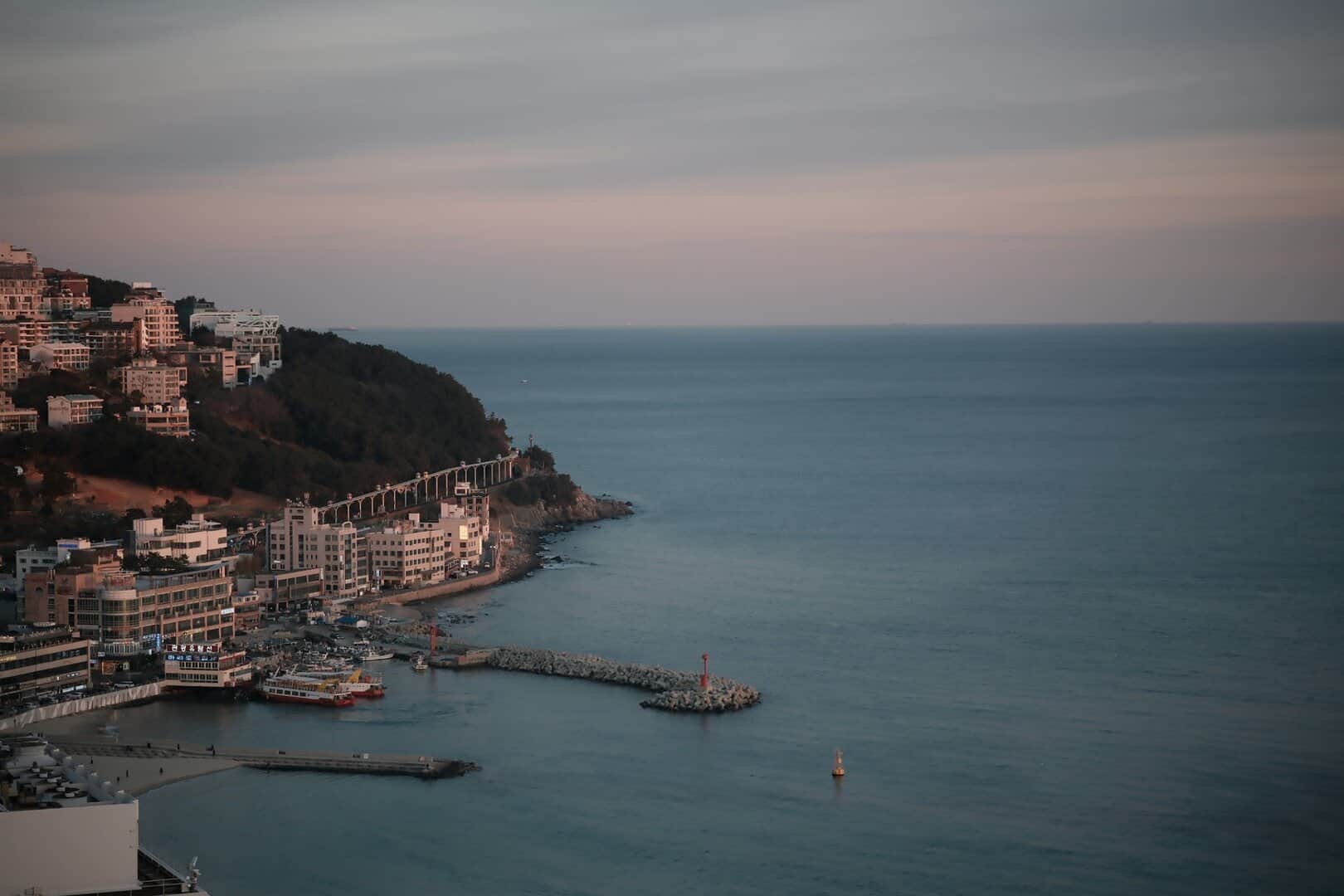
Plains That Extend Without Centre
Further west, along the vast stretches between major Chinese cities, the horizon behaves differently. It widens before tightening again near urban clusters. Infrastructure repeats in long, deliberate intervals — overpasses, stations, power lines receding in succession.
Journeys threading this landscape often follow lines like the Beijing to Shanghai train, where plains extend in muted sequence before dissolving into high-rise density. The shift feels incremental, almost procedural.
Outside, fields align in geometric patterns. Inside, lighting remains constant. The sensation of scale expands, though the interior remains contained.

Between Ridge and Grid
The Korean peninsula carries elevation in uneven intervals. China’s eastern plains stretch flatter, though not featureless. One gathers contour; the other gathers repetition.
Yet both rely on rhythm. Tunnel after tunnel. Field after field. Station after station. The cadence persists regardless of geography.
Neither demands spectacle. The movement feels steady, almost neutral.
The Line That Continues Beyond Border
Later, recollection softens distinction. A mountain ridge glimpsed in Korea aligns faintly with a distant Chinese skyline. The hum beneath carriage floors feels similar despite differing terrain.
What remains is not contrast between peninsula and mainland, but continuity of engineered motion across varied ground. Steel meeting earth. Window framing horizon.
And somewhere along that extended spine of track, the journey continues quietly — not framed by nation or narrative — simply unfolding across land that adjusts gradually beneath a widening sky.
Where Window and Horizon Overlap
There are moments when the glass reflects more clearly than the land beyond it. A passenger’s outline merges briefly with distant fields. Overhead lights hover faintly over rows of crops or factory roofs. In South Korea, hills appear and disappear behind this layered reflection. In China, the plains stretch long enough that the horizon feels suspended within the window frame.
The doubling makes it difficult to separate interior from exterior. Movement continues, yet the boundary between space inside and space outside softens.
The Stretch That Refuses Emphasis
Between southern peninsula and northern plain lies a continuity of track that does not dramatise difference. Stations emerge in measured intervals. Urban density gathers, then loosens. The sky remains broad enough to flatten scale into tone rather than monument.
Over time, ridge and grid begin to overlap in memory — greenhouses aligned with distant towers, river bends aligning with straight canals. The rhythm persists without selecting a centre. And somewhere along that extended corridor, the motion continues quietly, carried forward across changing ground without demanding contrast or conclusion.