
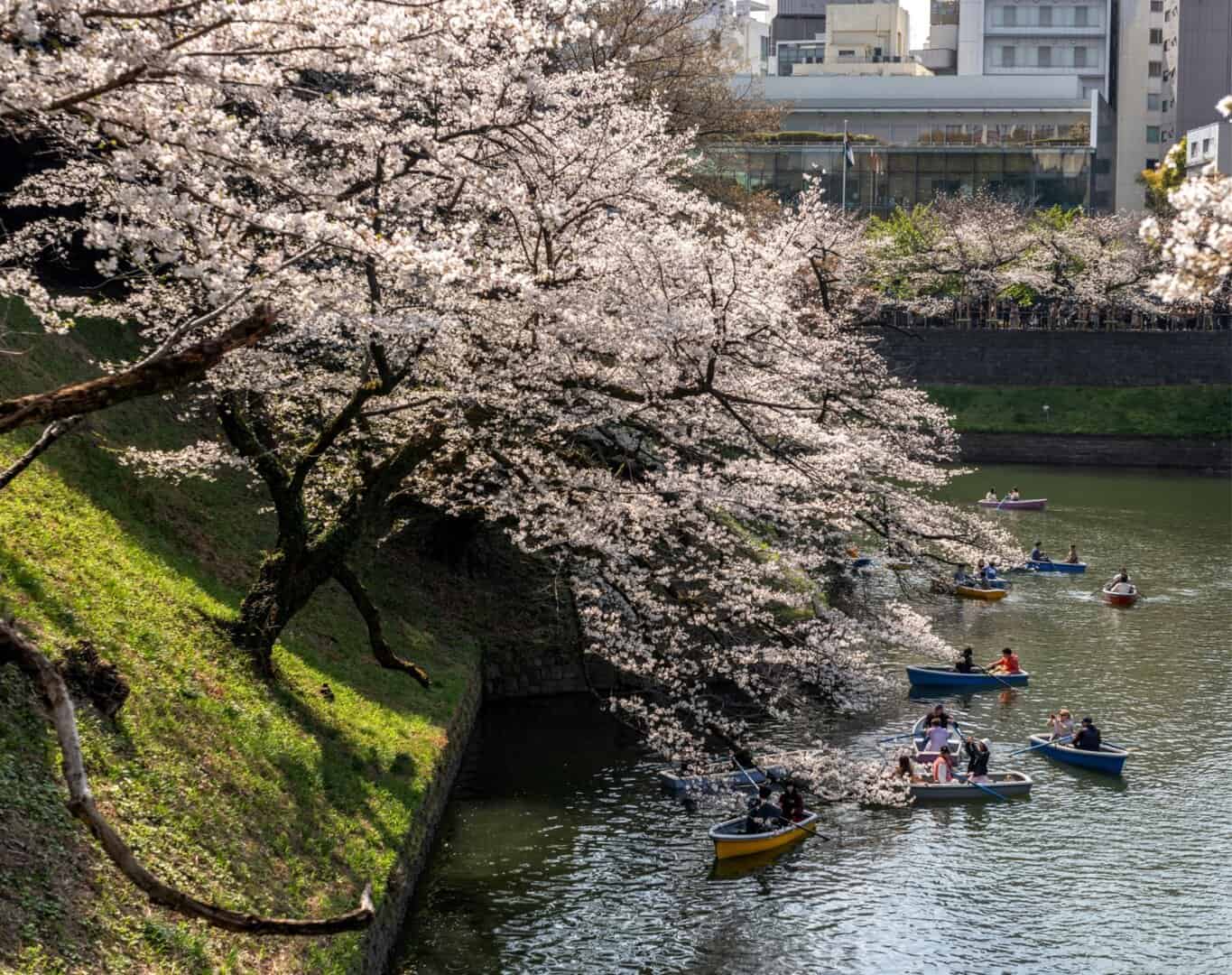
Tokyo rarely reveals its center all at once. Towers rise in the distance, but between them are stretches of unexpected quiet — gravel paths, low stone walls, trees bending inward as if to protect something older beneath the skyline. In Chiyoda, the Imperial Gardens open gradually, water gathering along the moat before the paths widen toward lawns and pines.
The air feels different within the garden boundary. Sound thins. Even the city’s constant hum seems to hover at a distance rather than intrude. Stone bridges arch without drawing attention to themselves. The sky appears wider than it did a few streets away.
Nothing feels ceremonial, though everything feels deliberate.
Where Gravel Holds the Morning
Inside the gardens, footsteps soften against compacted earth. Pine needles collect along the edges of stone. The arrangement of water, grass, and wall feels composed without appearing staged.
Later, the motion westward along lines such as the Tokyo to Osaka Shinkansen carries that same measured quality into open countryside. Buildings thin into fields. Hills rise and flatten again. The transition feels continuous rather than decisive.
In Chiyoda, the pace remains steady. Wind shifts branches lightly. The moat reflects cloud without intensifying it. Stillness does not announce itself; it persists quietly.
Streets That Refuse Containment
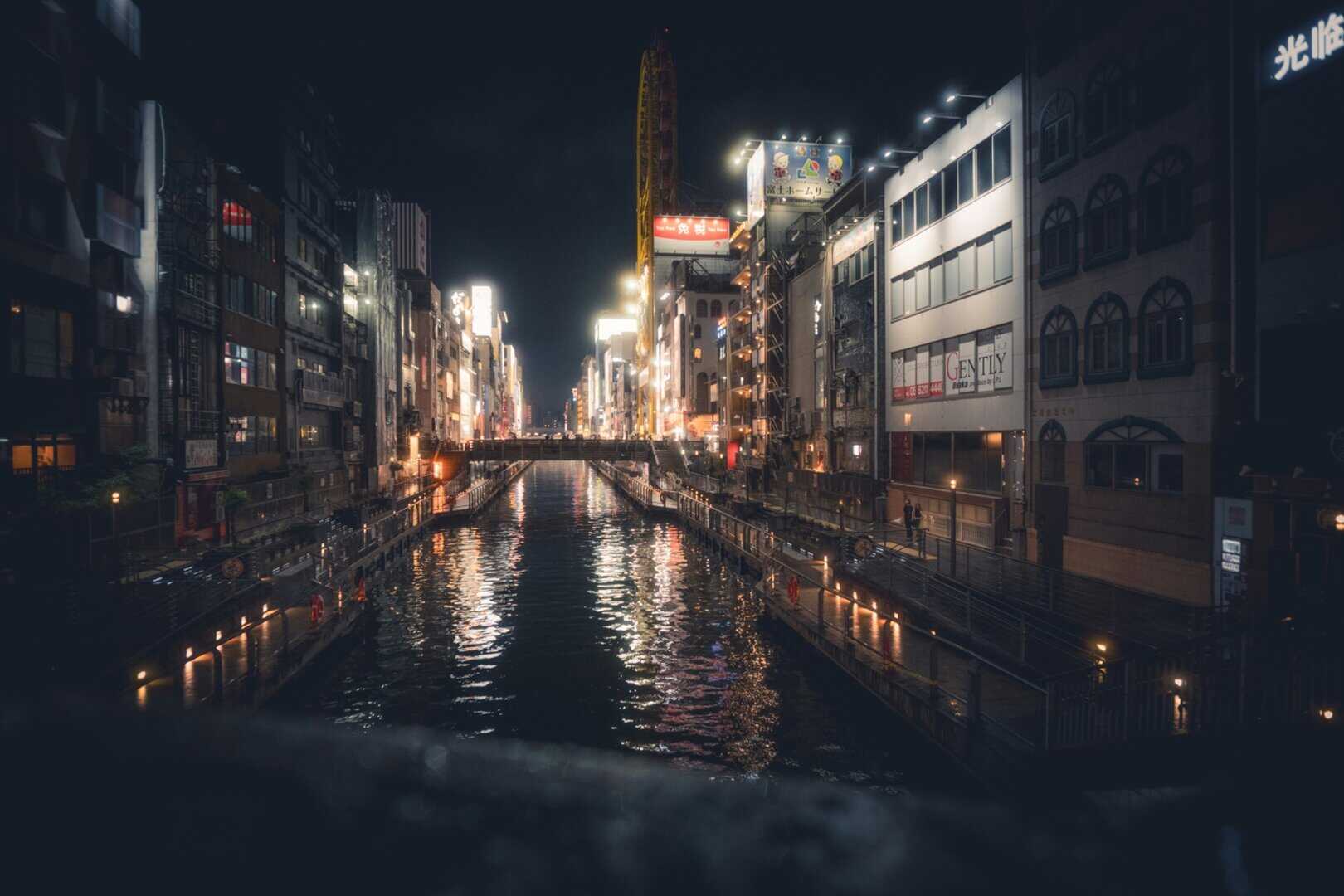
Osaka gathers movement differently. In Dotonbori, colour layers itself over storefronts and signs that lean outward toward the canal. Neon does not explode; it accumulates. Voices overlap without resolving into a single sound.
Journeys threading Kansai often follow routes like the Kyoto to Osaka train, where the urban fabric tightens and loosens in subtle increments. Even there, the shift feels atmospheric rather than abrupt.
Along Dotonbori, food stalls release steam into air already dense with scent. The canal holds reflections that fracture under passing boats. The street moves in steady currents rather than bursts.
Between Path and Promenade
The Imperial Gardens compress movement into measured intervals — bridge, bend, open lawn. Dotonbori disperses it across surface — sign, stall, step, pause. One feels inward. The other feels lateral.
Yet both rely on repetition. Stone after stone. Sign after sign. Neither insists on spectacle. Each holds its rhythm without escalation.
Contrast softens once distance intervenes.
The Line That Continues Beneath Both
Later, recollection merges pine shadow with canal reflection. The quiet curve of a garden path aligns faintly with the arc of Dotonbori’s water. Rail lines between cities blur into steady horizontal motion beneath wide sky.
What remains is not division between imperial enclosure and commercial vibrancy, but continuity of movement through space. Gravel holding imprint. Neon holding light.
And somewhere between moat and canal, the footsteps continue — not elevated, not concluded — simply carried forward beneath the same shifting Japanese sky.
Where Water Holds Different Kinds of Reflection
In Chiyoda, the moat carries sky in muted tones, its surface broken only by the faint ripple of wind or the passing shadow of a branch. In Dotonbori, the canal behaves differently. It gathers colour — red signage, yellow lantern glow — then fractures it under movement. The reflections never settle long enough to become symmetrical.
Yet in both places, water feels less decorative than structural. It steadies the garden. It anchors the street. Light bends across it without fully claiming it.
The Stretch That Refuses to Separate
Between Tokyo and Osaka lies a corridor of field, suburb, tunnel, and plain that rarely announces transition. Stations surface and dissolve. Hills appear in low succession. The pace remains even.
Over time, the memory of gravel path and illuminated promenade begins to overlap — stone and steam, pine shadow and sign glow. Neither dominates the other. And somewhere along that steady span, the rhythm continues quietly, not divided by city or tempo, simply carried forward beneath a sky that remains wide enough to hold both.