
How to Keep Your Wedding Dress Beautiful for Years to Come
How to preserve a wedding dress is likely on your mind now that the celebration is over. Your gown is hanging in your closet. You remember how it felt walking down the aisle.
And then a new thought comes in: “How do I keep it looking like this?”
You do not want hidden stains to show up months from now. Maybe you hope to pass it down one day. Or wear it again for a vow renewal. Or simply keep it safe as part of your story.
Whatever your reason, you want to protect it properly.
Here is exactly what you need to know to preserve your wedding dress the right way, so it stays beautiful for years to come.
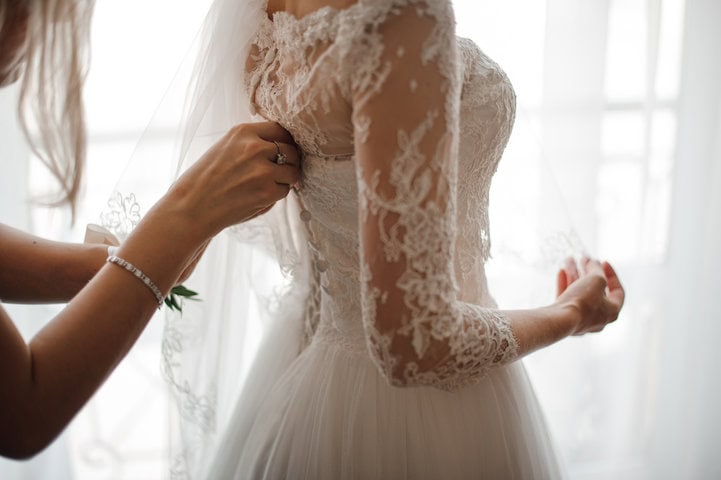
What Wedding Dress Preservation Really Means
When people say “preserve your dress,” it can sound simple. In reality, it is more specific than most brides realize.
Preservation is not just cleaning and boxing the gown. It is a process meant to protect fabric over time. Not just for a season. For years.
Some stains are easy to see. Dirt at the hem. A splash of wine. Smudged makeup.
But many are invisible. Clear drinks, perspiration, and body oils can settle into fabric without leaving a mark. At first, everything looks fine. Months later, those areas may begin to yellow. That change happens because of oxidation, a slow reaction between residue and air.
That is why timing matters.
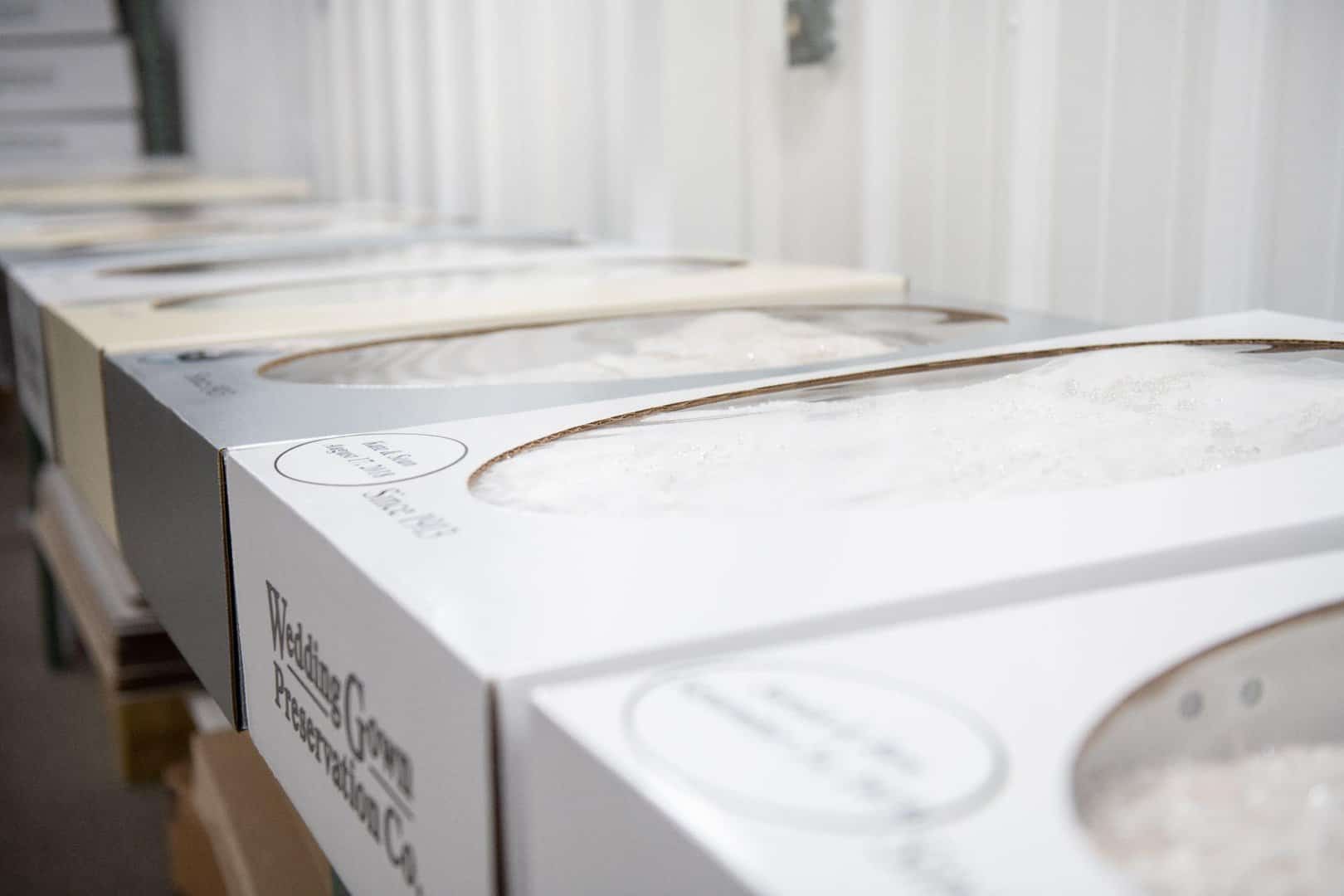
Professional preservation usually includes a close inspection of the entire gown, targeted stain treatment based on fabric type, careful cleaning, and storage in acid-free materials. Acid-free tissue cushions the folds. The storage box is designed to prevent fabric breakdown.
Regular cardboard contains acid. Over time, that acid can weaken fibers and cause discoloration. Archival materials are used specifically to avoid that problem.
If you want your dress to look the same ten or twenty years from now, these details are not minor. They are the difference.
Is Dry Cleaning Enough?
Dry cleaning removes surface dirt. It does not always address long-term preservation.
A standard cleaner may treat your gown like any other formal dress. It gets cleaned, pressed, and returned in plastic or cardboard packaging. That may be fine if you plan to wear it again soon. It is less ideal if you hope to store it for decades.
Preservation services tend to go deeper. They assess stains individually. They choose cleaning methods based on silk, satin, lace, or tulle. And they package the gown in materials meant for long-term stability.
If you are comparing services, ask these questions:
- How often do they handle wedding gowns?
- What storage materials do they use?
- Do they explain how they treat invisible stains?
You should feel comfortable with the answers.
What Does It Usually Cost?
In the United States, preservation generally falls between $250 and $1,000. The range is wide because dresses vary so much.
Fabric matters. So does construction. Heavy beading, lace appliqué, or a long train can increase cleaning time. Deep stains require more attention than light surface soil.
Some services include minor repairs. Some include shipping insurance. Others charge separately.
Before choosing, ask what the total price covers. That way you are not guessing.
Should You Handle Storage Yourself?
It is understandable to want control. It is your gown.
But long-term storage can be harder than it seems.
Heat weakens fibers. Humidity encourages mold. Acidic paper contributes to yellowing. And untreated stains slowly darken.
Attics often get hot. Basements tend to be damp. Regular tissue paper is not acid-free.
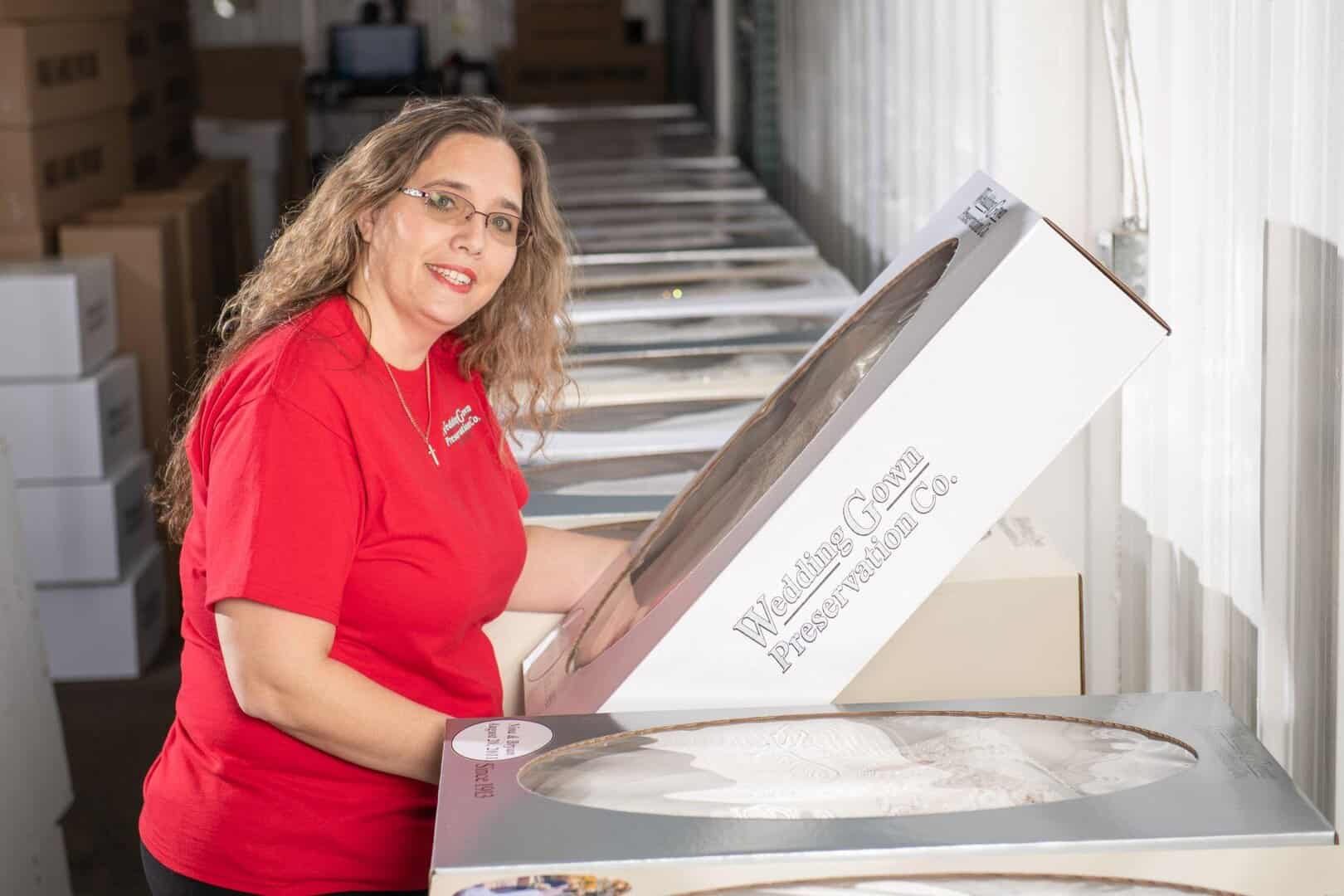
Professional preservation reduces those risks because it combines cleaning with proper materials and controlled packaging.
When looking for options, focus on clarity. Brides searching for the best wedding gown preservation services usually pay attention to experience, storage materials, and insurance coverage rather than marketing language.
The goal is simple. Keep the dress stable. Keep the color true. Keep the fabric strong.
A Few Practical Things You Can Do
- Clean your dress sooner rather than later.
Try not to let it sit for months. Stains settle deeper into fabric over time, even if they seem minor right now. The sooner it is treated, the better the outcome. - Assume there may be residue you cannot see.
Clear drinks, perspiration, and skin oils often leave no visible mark at first. That does not mean they are not there. Addressing them early prevents unexpected yellowing later. - Avoid plastic and standard cardboard for long-term storage.
Plastic can trap moisture around the fabric. Many cardboard boxes contain acids that slowly affect light-colored material. Acid-free, breathable storage is safer. - Choose a stable place inside your home.
A closet shelf in a temperature-controlled room usually works well. Try to avoid spaces that heat up or feel damp during certain seasons, such as attics or basements. - Handle the gown carefully if you open it in the future.
Wash your hands first. Natural oils from your skin transfer easily to delicate fabric. Refold it gently using the original acid-free tissue.
Frequently Asked Questions
How soon should you preserve your wedding dress?
You should preserve your wedding dress as soon as possible after the wedding, ideally within a few weeks. Early cleaning lowers the risk of permanent discoloration.
How long does wedding dress preservation last?
Wedding dress preservation can protect your gown for decades when it is cleaned properly and stored in acid-free materials in a stable environment.
How long does the preservation process take?
The preservation process usually takes between four and ten weeks, depending on the provider and the condition of the gown.
Can you wear your wedding dress after it has been preserved?
You can wear your wedding dress after it has been preserved. Many brides remove it for vow renewals or milestone anniversaries and choose to preserve it again afterward.
Conclusion
Your wedding dress is more than fabric. It represents a day you will always remember. Preserving it carefully allows you to keep that memory intact, not just in photos, but in the gown itself.